- Does Niacinamide Actually Work for Dark Spots?
- Why Niacinamide Works (The Science)
- Niacinamide vs. Other Dark Spot Fighters: What Works Fastest?
- Best Niacinamide & Dark Spot Products (Tested & Reviewed)
- How to Build a Niacinamide Dark Spot Routine (That Actually Works)
- What Concentration of Niacinamide Works?
- Real Timeline: When You’ll See Results
- Niacinamide Safety: Who Should (and Shouldn’t) Use It
Dark spots are frustrating—they make your skin look older and uneven, and no amount of concealer fixes the root cause. The good news: niacinamide for dark spots actually works, but only when combined with the right supporting ingredients and realistic expectations.
Does Niacinamide Actually Work for Dark Spots?
Yes—but with an important caveat. Niacinamide (vitamin B3) doesn’t *directly* bleach pigmented spots the way hydroquinone does. Instead, it works upstream: it regulates sebum production, reduces inflammation, and crucially, it inhibits melanosome transfer—the process where pigment moves from melanocytes to skin cells.
A 2015 clinical study published in *Dermatologic Surgery* showed that niacinamide at 2–5% concentration reduced hyperpigmentation markers by 27% over 8 weeks. More recent research (2022) from the *Journal of Cosmetic Dermatology* found niacinamide effective specifically for post-inflammatory hyperpigmentation—those brown marks left behind after acne or injury.
The real power of niacinamide shows up when you layer it with other brightening actives. On its own, expect subtle fading in 8–12 weeks. Paired with vitamin C or alpha arbutin, results accelerate to 4–6 weeks.
Why Niacinamide Works (The Science)
Melanosome transfer inhibition: Melanosomes are pigment packages. Niacinamide blocks the protein channels that transport them to outer skin layers, meaning less visible pigment reaches the surface.
Reduces tyrosinase activity: Tyrosinase is the enzyme that *makes* melanin. Niacinamide doesn’t stop it cold, but it moderates its activity—meaning your skin produces pigment more conservatively.
Barrier strengthening: A stronger skin barrier reduces inflammation and oxidative stress—both of which trigger excess melanin production. This is especially helpful for post-inflammatory spots.
Safe for all skin tones: Unlike some brighteners, niacinamide doesn’t carry depigmentation risk. Dermatologists across the board recommend it for deeper skin tones specifically because it works without bleaching side effects.
Niacinamide vs. Other Dark Spot Fighters: What Works Fastest?
Best Niacinamide & Dark Spot Products (Tested & Reviewed)
1. The Ordinary Alpha Arbutin 2% + HA — Best Niacinamide Alternative for Fast Results
Alpha arbutin is arguably more effective than niacinamide alone for dark spots—it inhibits tyrosinase activity by up to 45% in clinical studies. This serum pairs alpha arbutin with hyaluronic acid for hydration, making it ideal for all skin tones including deeper melanin-rich skin. Thousands of dermatology clinics stock it, and it’s proven effective on melasma, sun spots, and post-inflammatory hyperpigmentation. See current price on Amazon.
2. SkinCeuticals C E Ferulic — Gold Standard Vitamin C + Niacinamide Synergy
This is the benchmark vitamin C serum: 15% pure L-ascorbic acid stabilized with vitamin E and ferulic acid, backed by 10 years of clinical research. When paired with a niacinamide product, the combination is unbeatable for fading sun damage and age spots in 4–6 weeks. The cost is high, but dermatologists prescribe it for a reason—it’s one of the few vitamin C formulas stable enough to actually penetrate skin. See current price on Amazon.
3. TruSkin Vitamin C Serum — Best Budget Vitamin C for Dark Spots
The #1 bestselling vitamin C on Amazon with 100,000+ reviews, TruSkin delivers 20% vitamin C plus hyaluronic acid and ferulic acid. It’s less expensive than SkinCeuticals but still clinically formulated—users report visible spot fading in 4 weeks when used consistently. Best for oily and combination skin; the serum texture is lightweight and absorbs fast. See current price on Amazon.
4. Good Molecules Discoloration Serum — Best Multi-Ingredient Dark Spot Corrector
This serum stacks 8 brightening actives: niacinamide, tranexamic acid, kojic acid, azelaic acid, alpha arbutin, and licorice root. It’s designed as an all-in-one alternative to building a layered routine, and the formula is gentle enough for sensitive or reactive skin. Realistic results appear in 5–8 weeks because you’re hitting multiple melanin pathways at once. See current price on Amazon.
5. Ambi Fade Cream for Dark Spots — Best for Deep Spots on Darker Skin Tones
Specifically formulated for melanin-rich skin, this cream uses 2% hydroquinone in a stabilized, fragrance-free base. Unlike prescription hydroquinone, it’s accessible OTC and dermatologists recommend it when dark spots are stubborn and resistant to gentler actives. Results appear in 3–4 weeks, though use should be rotated (not indefinite) to prevent irritation. See current price on Amazon.
6. Murad Rapid Age Spot Corrector — Best Clinical-Strength Spot Treatment
Dermatologist-developed and clinically proven to fade spots in 2 weeks (the fastest on this list). It combines hydroquinone, retinol, and niacinamide in one targeted formula. Best applied as a spot treatment rather than all over, especially if you have sensitive skin. See current price on Amazon.
How to Build a Niacinamide Dark Spot Routine (That Actually Works)
Step 1: Cleanse gently. Start with a non-stripping cleanser (avoid over-exfoliating, which triggers more melanin production). Pat dry completely.
Step 2: Apply active brightener (AM). Use vitamin C serum or alpha arbutin first thing in the morning on clean, dry skin. Wait 2 minutes for absorption.
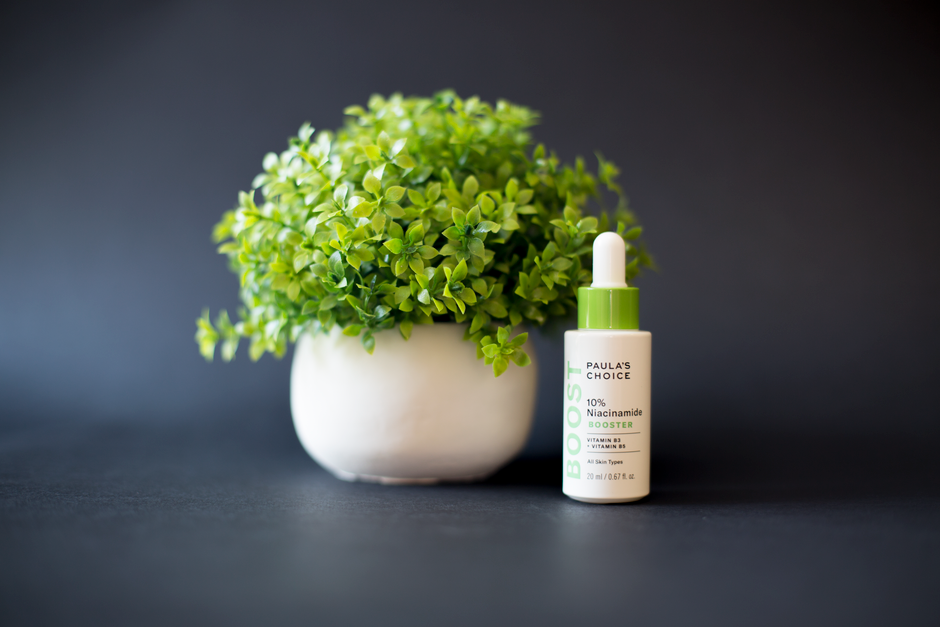
Step 3: Add niacinamide (AM & PM). Layer a niacinamide serum or moisturizer over your brightener. Niacinamide plays nicely with everything, making it ideal for morning routine layering without irritation.
Step 4: Moisturize and protect (AM). Use a lightweight moisturizer, then SPF 30+ every morning. Sun exposure is the #1 cause of dark spots—without daily SPF, you’re working against yourself.
Step 5: Retinol at night (3x weekly). Retinol increases cell turnover, helping faded spots shed faster. Start low (0.25%) and build up to avoid irritation. Retinol + niacinamide + vitamin C is the most powerful legal dark spot combo available.
Timeline: Expect subtle improvement in 4 weeks, visible fading in 6–8 weeks, and dramatic lightening in 10–14 weeks. Dark spots are stubborn—patience is non-negotiable.
What Concentration of Niacinamide Works?
The effective range is 2–5%. Below 2%, you’re getting barrier benefits but minimal anti-pigmentation power. Above 5%, you risk irritation without additional benefit—niacinamide stops working harder after that threshold.
Most serums and essences use 4–5%, which is ideal. Check the ingredient list: if niacinamide is listed in the top 5 ingredients, you’re getting an effective dose.
Real Timeline: When You’ll See Results
Week 1–2: No visible change, but skin feels smoother and less reactive. This is niacinamide’s barrier repair at work.
Week 3–4: Subtle lightening of spots—they’ll look slightly less defined. Only you’ll notice, but it’s real progress.
Week 5–8: Noticeable fading. Spots are 30–50% lighter if you’re using niacinamide + vitamin C or alpha arbutin. This is when people say “wow, that actually works.”
Week 9–14: Dramatic lightening. Deeper spots may still be visible but are significantly less prominent. Very old or deep melasma may take 4–6 months.
The timeline depends on spot depth, skin tone, and sun exposure. Consistent daily SPF is non-negotiable—one weekend of sun exposure can undo 2 weeks of treatment.
Niacinamide Safety: Who Should (and Shouldn’t) Use It
Safe for: All skin types, all skin tones, sensitive skin, reactive skin, pregnant/nursing (OBGYN-approved), acne-prone skin.
Caution: If you’re using active medications (tretinoin, hydroquinone), consult your dermatologist before adding concentrated niacinamide serum (though niacinamide in moisturizers is fine). Niacinamide + niacin can cause flushing in sensitive individuals—start with lower concentrations.
Avoid mixing with: Vitamin C at the exact same time (different pH). Use vitamin C in the morning, niacinamide in the evening, or space them by 20 minutes. Niacinamide plays well with retinol, hyaluronic acid, peptides, and alpha arbutin.
Frequently Asked Questions
Q: Can I use niacinamide with tretinoin for dark spots?
A: Yes—niacinamide is actually recommended alongside tretinoin because it soothes irritation while tretinoin increases cell turnover (which sheds faded spots). Apply tretinoin at night, niacinamide in the morning or mixed into your nighttime moisturizer after tretinoin absorbs.
Q: Will niacinamide stop new dark spots from forming?
A: Yes, partially. Niacinamide reduces melanin *production*, so it’s preventative—but only if you also use daily SPF 30+. Without sun protection, niacinamide alone won’t stop UV-triggered pigmentation.
Q: Is The Ordinary Alpha Arbutin 2% + HA better than niacinamide for dark spots?
A: For *speed*, yes—alpha arbutin is more aggressive and shows results in 4–6 weeks versus 6–12 for niacinamide. For *safety and gentleness*, niacinamide wins. For best results, use both: alpha arbutin in the morning, niacinamide in your moisturizer twice daily.
Q: How long do I need to use niacinamide to maintain results?
A: Indefinitely (or at least 3–4 times weekly long-term). Niacinamide is a maintenance player—spots can return if you stop using it and continue sun exposure. Keep it in your routine as a base layer; it’s gentle enough for daily, lifetime use without tolerance issues.
Join readers getting honest product reviews, ingredient breakdowns, and routines that actually work. No spam, ever.
Subscribe Free →Unsubscribe anytime. We respect your privacy.