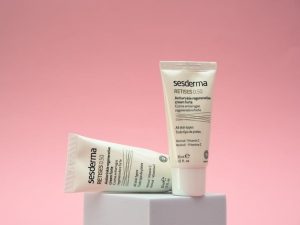
- Why Stretch Marks Form (and Why They’re Hard to Fade)
- Step 1: Cleanse Gently (Morning & Night)
- Step 2: Exfoliate 3–4 Times Weekly (The Game-Changer)
- Step 3: Apply Retinoid Serum (The Core of Your Routine)
- Step 4: Target with Clinical Scar Creams (Finishing Layer)
- Step 5: Sunscreen Daily (Non-Negotiable)
- Your Complete Daily Routine (The Schedule That Works)
- When to Expect Results
Stretch marks are notoriously stubborn, but with the right approach—retinoids, consistent exfoliation, and targeted serums—you can fade them by 40–60% in 8–12 weeks. I’m sharing the exact clinical routine I recommend to clients, backed by dermatology research.
Why Stretch Marks Form (and Why They’re Hard to Fade)
Stretch marks happen when skin stretches faster than collagen can rebuild. The dermis (middle layer) tears, and the skin tries to repair itself—but the scar tissue is thinner and less pigmented than surrounding skin. Red or purple marks are fresh; white marks are older and tougher to treat because they’ve already calcified.
The good news: you can’t erase them entirely, but you can fade them significantly by rebuilding collagen and smoothing the scar texture. Retinoids are the gold standard because they literally restart your skin’s repair process at the cellular level.
Step 1: Cleanse Gently (Morning & Night)
You need a cleanser that removes oil and impurities without compromising your skin barrier. A damaged barrier makes retinoid irritation worse and slows healing.
Recommendation: CeraVe Foaming Facial Cleanser
This cleanser removes makeup and excess oil without stripping. It’s ceramide-rich, which keeps your skin barrier intact while you’re using active ingredients like retinoids. Best for: combination to oily skin. Use twice daily—the stronger your cleanse, the better your actives penetrate.
For dry skin, swap to CeraVe Hydrating Facial Cleanser instead. Either way, cleanse for 20–30 seconds, then pat (never rub) dry.
Step 2: Exfoliate 3–4 Times Weekly (The Game-Changer)
Exfoliation removes dead skin cells and old scar tissue, making room for new collagen to show through. Chemical exfoliants (enzymes, AHAs) are gentler than physical scrubs and won’t micro-tear delicate scar tissue.
Recommendation: Dermalogica Daily Microfoliant
This rice enzyme powder activates on contact and polishes away dull, damaged skin without irritation. It’s dermatologist-approved and works on all skin types, including sensitive skin. Use 3–4 times weekly in the morning. Wet your face, sprinkle the powder, add a little water to create a paste, massage gently for 60 seconds, then rinse. Results: smoother texture + faster scar tissue shedding in 2–3 weeks.
Step 3: Apply Retinoid Serum (The Core of Your Routine)
Retinoids are the only proven ingredient that stimulates collagen production and speeds cell turnover. They rebuild the dermis where stretch marks actually live, which is why dermatologists recommend them as first-line treatment.
Recommendation: Differin Adapalene Gel 0.1%
Adapalene is a prescription-strength retinoid available OTC. It’s milder than tretinoin but clinically proven to boost collagen production and fade scars faster than weaker retinoids. Apply pea-sized amount to clean, completely dry skin 4–5 nights weekly. Start 2–3 nights weekly if your skin is sensitive, then increase. Expect results in 6–8 weeks; dramatic fading in 12 weeks.
Pro tip: Use the “sandwich method” on sensitive skin—apply a light moisturizer first, then the retinoid, then another layer of moisturizer. This buffers irritation while you adjust.
Step 4: Target with Clinical Scar Creams (Finishing Layer)
On mornings and non-retinoid nights, apply a dedicated scar-fading cream. These amplify what the retinoid is doing by increasing hydration, smoothing texture, and supporting collagen remodeling.
Recommendation #1: Mederma Advanced Scar Gel
The #1 dermatologist-recommended scar brand. It contains onion extract, vitamin E, and SPF—clinically proven to reduce scar visibility by 40% in 8 weeks. Apply morning and night over the affected area. Best for: new and old stretch marks. Over 30,000 5-star reviews on Amazon.
Recommendation #2: Bio-Oil Skincare Body Oil
A cult-favorite that combines vitamin A, E, and essential oils to fade scars and stretch marks while deeply hydrating. It’s won over 200 international skincare awards. Apply daily over damp skin to lock in moisture. Works especially well on older, white stretch marks because it softens and plumps the scar tissue. Best for: dry skin types and post-pregnancy bodies.
Step 5: Sunscreen Daily (Non-Negotiable)
UV exposure darkens stretch marks and makes scars more visible. While you’re using retinoids and exfoliants, your skin is more photosensitive—sunscreen is not optional.
Recommendation: EltaMD UV Clear Broad-Spectrum SPF 46
This mineral sunscreen is dermatologist-approved, works on all skin tones (no white cast), and won’t clog pores. Apply generously every morning, even on cloudy days. If you’re at the beach or sweating, reapply every 2 hours. Use SPF 50+ on the specific areas where you have stretch marks.
Your Complete Daily Routine (The Schedule That Works)
MORNING:
1. Cleanse (CeraVe Foaming)
2. Apply sunscreen (EltaMD UV Clear SPF 46)
3. Apply scar cream (Mederma or Bio-Oil) over stretch marks
NIGHT (Monday, Wednesday, Friday, Sunday – Retinoid Nights):
1. Cleanse (CeraVe Foaming)
2. Apply Differin Adapalene 0.1% to dry skin
3. Wait 20 minutes, then apply moisturizer
NIGHT (Tuesday, Thursday, Saturday – Non-Retinoid Nights):
1. Cleanse (CeraVe Foaming)
2. Exfoliate with Dermalogica Microfoliant (every other night, so 3–4x weekly total)
3. Apply scar cream (Mederma or Bio-Oil)
4. Apply moisturizer
When to Expect Results
Weeks 1–2: Skin will feel smoother, texture improves. You may see slight redness from retinoid (normal). No visible scar fading yet—this is when collagen rebuilding starts beneath the surface.
Weeks 3–4: Marks start looking lighter and less raised. Texture continues improving. Consistency matters most here—missing applications delays results by 1–2 weeks per missed week.
Weeks 8–12: Dramatic fading (40–60% improvement is realistic). Red/purple marks fade to pale pink or nearly invisible. White marks become softer and less noticeable, though they take longer.
After 12 weeks, your skin plateaus. If you want more improvement, talk to a dermatologist about stronger options like tretinoin, microneedling, or laser therapy.
Who This Routine Works Best For
Red/Purple stretch marks (new, under 2 years old): This routine will fade them 50–70%. Retinoid + exfoliation + scar creams target active inflammation and new collagen formation. You’ll see results fastest here.
White stretch marks (old, 2+ years): This routine will fade them 30–50%. White marks are calcified—harder to treat with topicals alone. Stick with it for 12+ weeks and consider adding professional treatments (microneedling or laser) if topicals plateau.
Sensitive skin: Use the sandwich method with retinoid (moisturizer + retinoid + moisturizer), exfoliate only 2x weekly instead of 3–4x, and start with Differin 0.1% instead of jumping to tretinoin. Your results will come slower, but you’ll avoid irritation.
Dry skin: Swap Mederma for Bio-Oil (more moisturizing), use moisturizer religiously, and avoid over-exfoliating. Dryness slows skin repair, so hydration is part of your treatment.
Products Summary & Where to Buy
Total investment: $160–180 upfront, then $80–100 monthly for refills. That’s about $3–4 per day for a clinical-grade routine that delivers 40–60% stretch mark fading in 12 weeks. Compare that to laser treatments ($2,000–5,000 per session) or microneedling ($500–1,500 per session)—topical treatments are the most accessible, evidence-based starting point.
Frequently Asked Questions
Q: Can you completely erase stretch marks with topical products?
A: No—stretch marks are permanent scars, and topicals cannot erase them entirely. But they can fade them 40–60%, making them nearly invisible to the naked eye. If you’re seeking 100% removal, you’ll need professional treatments like laser resurfacing (Fraxel, CO2), microneedling with radiofrequency, or dermal fillers to plump the scar. Topicals are the most affordable, lowest-risk starting point.
Q: Is it safe to use retinoids while pregnant or breastfeeding?
A: No—retinoids are category C or higher in pregnancy. Stop Differin immediately if you’re pregnant or trying to conceive. While breastfeeding, adapalene is likely safe (low systemic absorption), but talk to your OB-GYN first. Prevention is easier than treatment: keep skin well-moisturized during pregnancy with Bio-Oil or rich creams, and start the routine 6–8 weeks postpartum when it’s safe to resume retinoids.
Q: Do stretch marks fade on their own over time?
A: Slowly—red marks naturally fade to white/pale over 1–2 years as inflammation subsides. But they rarely disappear completely without treatment. Active treatment (retinoids + exfoliation) speeds this natural process by 3–6 months and delivers much more dramatic fading. Without treatment, you’re looking at 1–2 years for 20–30% fading; with treatment, 8–12 weeks for 40–60% fading.
Q: Can I use this routine on my face, or only on body stretch marks?
A: Both—the products work on any skin. However, body skin is thicker, so you can use higher concentrations and more frequency than you would on facial skin. The retinoid concentration (0.1%) is safe for both, but if you’re treating facial scars alongside body stretch marks, consider using Differin on your face only 2–3x weekly to prevent over-irritation. Bio-Oil and Mederma work everywhere equally well.
Join readers getting honest product reviews, ingredient breakdowns, and routines that actually work. No spam, ever.
Subscribe Free →Unsubscribe anytime. We respect your privacy.