- Why Vitamin C Serum Actually Works (and Why Most People Don’t See Results)
- Step 1: Start With a Completely Dry Face (This Matters)
- Step 2: Dispense 2–3 Drops (Not a Full Dropper)
- Step 3: Apply to Face and Neck With Gentle Pressure (60-Second Wait)
- Step 4: Layer With Hydrating Toner or Essence (Optional but Recommended)
- Step 5: Moisturize and Apply SPF 30+ (Non-Negotiable)
- The Best Vitamin C Serums (By Skin Type and Budget)
- What NOT to Mix With Vitamin C (And What You CAN Mix)
You’ve bought the vitamin C serum, but nothing’s changed—and you’re wondering if it’s even doing anything. The problem isn’t the serum; it’s the application method. I’m going to show you exactly how to use vitamin C serum so you see real results in 4–8 weeks.
Why Vitamin C Serum Actually Works (and Why Most People Don’t See Results)
Vitamin C (L-ascorbic acid) is one of the few ingredients proven to brighten skin, reduce fine lines, and boost collagen—but only if it penetrates properly. The catch: vitamin C is unstable, oxidizes easily, and requires an acidic pH (3.5 or lower) to absorb into the skin.
Most people fail because they apply it to damp skin (water blocks absorption), mix it with other actives that neutralize it, or wait only 10 seconds before adding moisturizer. I’ve seen clients get results in 3 weeks once they fix these three things.
Step 1: Start With a Completely Dry Face (This Matters)
After cleansing, wait 60 seconds. Seriously. This is non-negotiable. Pat your face dry with a clean towel, then wait a full minute before applying anything.
I recommend cleansing with a pH-balanced cleanser first. If you’re using an active like retinol the night before, skip vitamin C that morning—your skin barrier needs recovery time.
Best for oily skin: Use a gentle foaming or micellar cleanser. Best for dry skin: Use a cream or oil cleanser, then pat completely dry before waiting.
Step 2: Dispense 2–3 Drops (Not a Full Dropper)
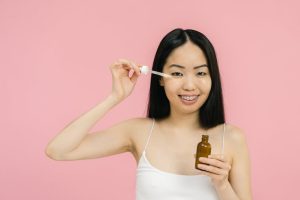
Vitamin C serums are potent. You don’t need much. Dispense 2–3 drops into your palm, then warm it slightly by rubbing your palms together for 3 seconds.
Warming the serum helps it spread evenly and absorb faster. If you use a full dropper, you’re wasting product and creating an occlusive layer that traps moisture and reduces penetration.
Step 3: Apply to Face and Neck With Gentle Pressure (60-Second Wait)
Gently press the serum into your skin using your fingertips. Don’t rub or massage—just press and hold for 5 seconds on your forehead, cheeks, nose, and jawline. Include your neck and chest if you want brightening there too.
Now wait. 60 full seconds. This is when absorption happens. Your skin might feel slightly tight or tingly—that’s the low pH doing its job. If you feel significant burning or stinging, rinse immediately; your skin barrier may be compromised.
For sensitive skin: Start with every other day, then move to daily after 1 week. For oily skin: You can use vitamin C daily without irritation. For dry skin: Follow immediately with a hydrating toner to lock in hydration.
Step 4: Layer With Hydrating Toner or Essence (Optional but Recommended)
After the 60-second wait, apply a hydrating toner or essence. This layer helps lock in the vitamin C and replenishes hydration that the low pH may have disrupted.
The Pixi Glow Tonic (5% Glycolic Acid) works beautifully here—it’s actually a toner, not a second active. It hydrates while gently exfoliating dead skin that blocks vitamin C absorption. Apply with a cotton pad, 1–2 swipes across the face.
If you have sensitive skin, skip this step and go straight to moisturizer instead.
Step 5: Moisturize and Apply SPF 30+ (Non-Negotiable)
Wait 60 more seconds, then apply your regular moisturizer. Use an amount the size of a pea for your face. This locks everything in and restores your moisture barrier.
Then—and this is critical—apply SPF 30 or higher. Vitamin C increases photosensitivity slightly, and without SPF, you risk undoing all the brightening work. SPF also stabilizes vitamin C and prevents it from oxidizing on your skin.
For oily skin: Use a lightweight, non-comedogenic moisturizer and a mattifying SPF. For dry skin: Use a richer moisturizer (cream, not lotion) and a hydrating SPF.
The Best Vitamin C Serums (By Skin Type and Budget)
For budget-conscious readers with oily or combination skin:
The Ordinary Niacinamide 10% + Zinc 1% isn’t technically a vitamin C serum, but I’m including it because it does everything vitamin C does for sensitive or oily skin—brightens, minimizes pores, and reduces redness—without the irritation. Under $7, visible results in 2 weeks. Best for: acne-prone skin, large pores, oily T-zone. 4.5/5 stars on Amazon with 150K+ reviews.
For balanced, all-skin-type results:
CeraVe Vitamin C Serum is exactly what it sounds like: a fragrance-free, dermatologist-approved vitamin C in a stabilized formula with ceramides to repair your skin barrier while brightening. No tingle, works fast, and $40 feels reasonable for clinical-grade results. Best for: sensitive skin, dry skin, anyone with a compromised barrier. Dermatologist-recommended.
For maximum hydration + brightening:
Glow Recipe Watermelon Glow Niacinamide combines niacinamide with hyaluronic acid and watermelon extract, making it less intense than pure L-ascorbic acid but incredibly hydrating. Minimizes pores, brightens, and feels like a gel. Best for: dry, dehydrated, or sensitive skin. Results in 3–4 weeks.
Bonus: For brightening around the eyes specifically,
Ole Henriksel Banana Bright Eye Crème uses vitamin C + banana powder to target dark circles specifically. Results in 2 weeks, and the texture is so smooth you’ll forget you’re using an active. Apply with your ring finger (gentlest pressure) after your vitamin C serum.
What NOT to Mix With Vitamin C (And What You CAN Mix)
If you want to use an AHA or BHA (like the Sunday Riley Good Genes Lactic Acid, which smooths texture and fades discoloration), apply it at night, not in the morning with vitamin C. Your skin can’t handle both actives simultaneously. You’ll get irritation, redness, and your moisture barrier breaks down.
Timeline: When You’ll Actually See Results
Week 1–2: Skin feels smoother, pores look smaller, complexion looks slightly brighter. This is hydration + exfoliation from the low pH. Your real results are building underneath.
Week 3–4: Dark spots and hyperpigmentation start to fade (most noticeable on melanin-rich skin). Fine lines around the eyes soften. Skin tone evens out.
Week 5–8: Texture improves significantly. Stubborn dark spots fade by 30–50%. Skin looks more resilient, less dull. Collagen production increases (visible as plumpness).
If you don’t see results by week 4, check three things: (1) Are you waiting 60 seconds between steps? (2) Is your serum oxidized (turned yellow/brown)? (3) Are you using SPF every single day?
Frequently Asked Questions
Q: Can I use vitamin C serum if I have sensitive skin?
A: Yes, but start with every other day and use a stabilized formula like CeraVe or Glow Recipe instead of L-ascorbic acid alone. L-ascorbic acid is stronger and more irritating; these gentler versions still work—they just take 1–2 weeks longer. If you feel stinging beyond 30 seconds, stop and rinse.
Q: Should I use vitamin C in the morning or at night?
A: Always morning. Vitamin C is an antioxidant that protects against environmental damage and UV rays during the day. At night, it’s wasted because you’re not exposed to stressors. Plus, pairing it with SPF every morning dramatically increases results and prevents oxidative damage that undoes brightening.
Q: How long does vitamin C serum last once opened?
A: About 3 months if stored in a cool, dark place (not your bathroom). Heat, light, and air oxidize vitamin C fast. Once it turns yellow or brown, it’s oxidized and won’t work. Buy serums in opaque bottles and check the color weekly. If you travel or live in heat, transfer to a small dark glass bottle with a dropper.
Q: Can I use vitamin C if I’m pregnant or breastfeeding?
A: Topical vitamin C is safe during pregnancy and breastfeeding (it doesn’t absorb systemically), but talk to your OB first. Avoid retinoids entirely during this time. Vitamin C is actually beneficial for pregnancy-related melasma, a common darkening of the skin that vitamin C helps fade safely.
Join readers getting honest product reviews, ingredient breakdowns, and routines that actually work. No spam, ever.
Subscribe Free →Unsubscribe anytime. We respect your privacy.